West County, MO
What Causes Foundation Settling in West County, MO
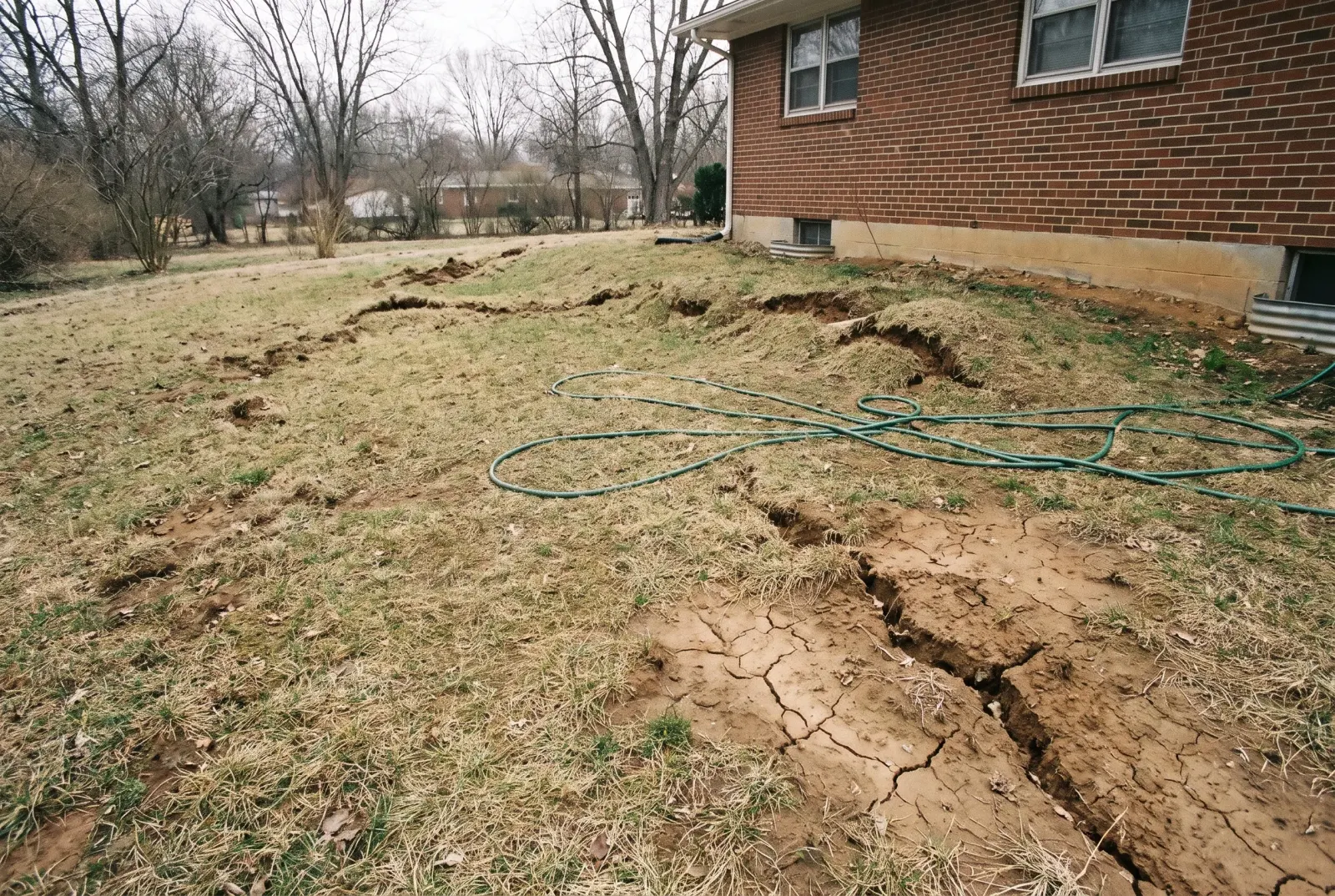
Foundation settling gets treated as one problem with one cause, and it is not. What causes foundation settling in a West County house is usually one of four specific mechanisms — soil chemistry, drainage, tree roots, or a leak — each with a different fix, and none of them explained by "the house is just old." Here is what is actually moving the ground under your foundation, and how to tell settling that is finished from settling that is still happening.
Expansive Clay Is the Baseline Cause in This Market
West County sits on some of the most reactive clay in the Midwest. That clay absorbs water and swells every wet spring, then dries out and shrinks every August — and it does this every year, not once. A foundation built on soil that expands and contracts annually experiences a slow-motion push-and-release cycle most other regions never see, which is why settling here is rarely a single event. It is usually a cumulative one, and a foundation that looked stable five years ago can be measurably different today purely from repeated seasonal cycling, with no single dramatic cause.
Poor Drainage Is the Most Preventable Cause
A downspout that empties within a few feet of the foundation, or grading that slopes toward the house instead of away from it, repeatedly saturates the soil directly under the footing. In stable soil that is a minor issue; in expansive clay it is the trigger for the swelling cycle described above, concentrated right where the foundation needs the soil to be predictable. This is also the cause with the best return on fixing it — extending downspouts and correcting grade slope does not repair existing settling, but it is often the single change that stops new movement from accumulating.
Tree Roots Cause Settling in Both Directions
A large tree planted close to a foundation draws moisture out of the surrounding clay, especially during a dry stretch, and that moisture loss shrinks the soil and can leave voids under a footing. The less obvious version runs the other way: when a mature tree near the foundation is removed, its root system stops pulling water out of the ground, and soil that had been kept relatively dry for years starts absorbing normally again and swells. That is why settling sometimes shows up a year or two after a tree comes down rather than before — the cause is easy to miss because the timeline does not match most homeowners' intuition.
A Slow Plumbing Leak Erodes Soil Where You Cannot See It
A supply line or drain leak under a slab or near a footing can wash fine soil particles away over months or years, creating a void the foundation eventually settles into. This cause is the hardest to catch early because there is often no visible water — just a slowly developing settling pattern with no obvious external explanation. It is also why an engineer's assessment matters more than a homeowner's guess here: distinguishing a hidden leak from clay-driven settling usually requires moisture readings or a plumbing camera, not a visual inspection of the crack alone.
Foundation Problems vs. Normal Settling — the Actual Distinction
Some settling after construction is normal and expected: fill soil under and around a new foundation compacts under the building's weight, and most of that settling happens in the first two to five years, is roughly even across the whole foundation, and then stops. A foundation problem looks different in two specific ways — it is uneven (one corner or wall drops more than the others) or it continues well past that early window instead of tapering off. A house still actively settling 20 years after it was built has not simply settled slowly; something ongoing — clay cycling, drainage, roots, or a leak — is driving it, and that something is fixable once it is identified correctly.
Why the Cause Matters More Than the Crack
Two houses can show the identical crack and need completely different repairs, because the crack is a symptom and the cause underneath it determines the fix. Piering addresses a foundation that is still moving under load. Drainage correction addresses a clay-cycling cause before it recurs. A camera inspection and a plumbing repair address a leak-driven void that piering alone will not solve. Diagnosing the cause first — not just measuring the crack — is the difference between a repair that holds and one that needs redoing in five years.
An independent, engineer-led inspection identifies which of these is actually happening at your house before anyone proposes a fix — and tells you honestly if the answer is "monitor it," not just "sign here."
Related Reading
- Signs Your West County Basement Wall Is Failing
- Foundation Piering Cost, St. Louis County
- West County Foundation Repair Cost Guide
- Crawl Space Foundation Repair Cost
- Free Basement Wall Crack Log & Bid Comparison Worksheet