Chesterfield & West County, MO
Wall Anchors vs. Carbon Fiber for a Bowing Basement Wall
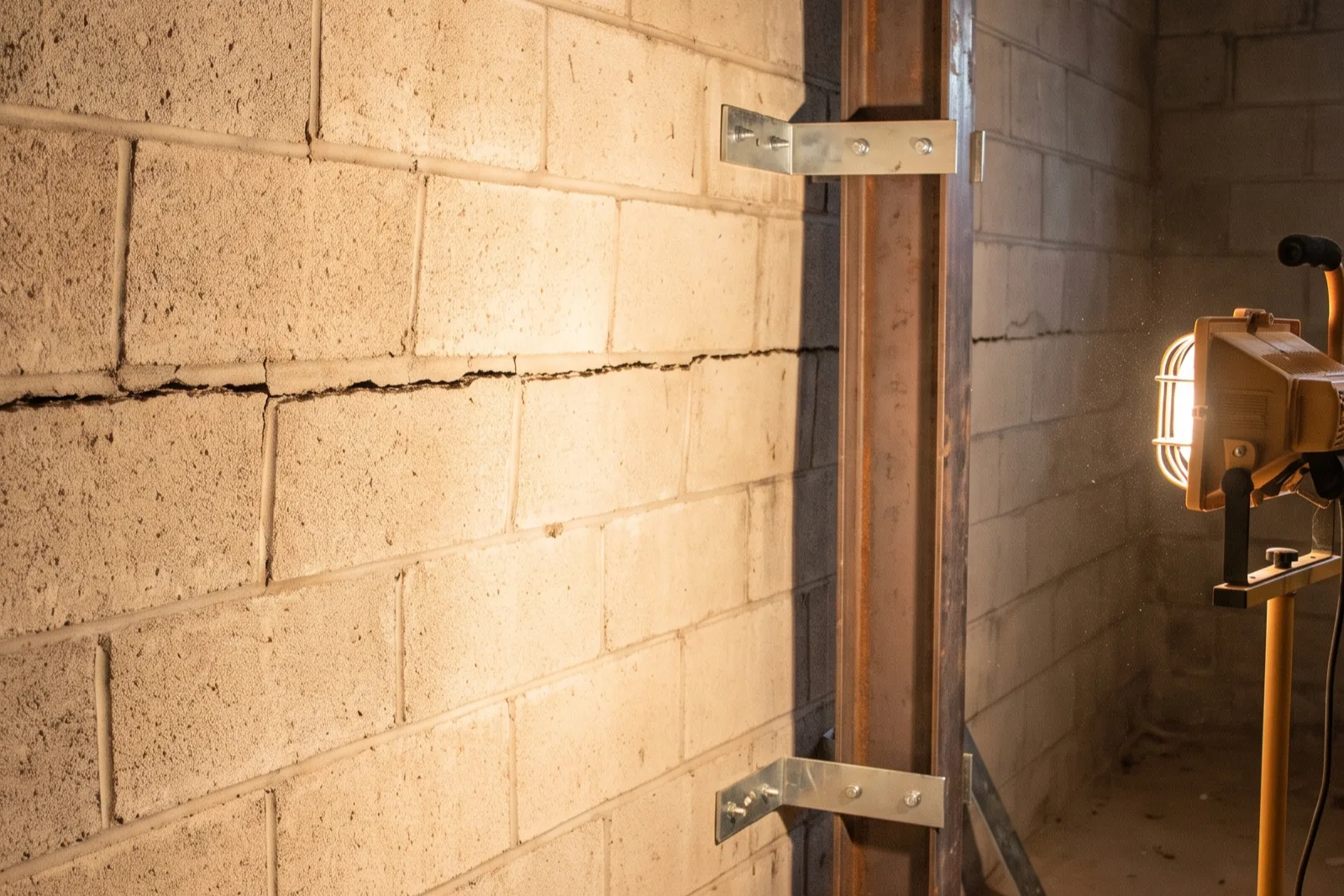
Wall anchors and carbon fiber straps both stop a bowing basement wall from getting worse, but only one of them can pull the wall back toward plumb. If you've already read what causes the bow in the first place in our guide to Chesterfield bowing basement wall repair, this page is the method decision itself: which system your measured deflection actually calls for, what each one costs to install, and where yard access rules one of them out before price ever enters the conversation.
Do wall anchors actually straighten a bowing basement wall?
Yes, gradually. A wall anchor system sets a steel plate against the interior wall face, ties it through a rod run out into stable soil, and anchors it to a second plate on the exterior. Because that rod can be re-tightened at the interior wall plate every few months, a wall anchor system can pull measurable bow back out of a wall over one to two seasons. Carbon fiber cannot do this — it locks the wall at whatever position it's in when installed.
The recovery only works because the anchor is a mechanical connection, not an adhesive one. Once the interior nut is tightened a partial turn, the rod pulls the wall plate — and the wall behind it — a fraction of an inch back toward the anchor point in stable soil beyond the backfill zone. Contractors typically schedule the first adjustment 60–90 days after install, once the wall has had a season to respond, then re-check annually. How far a wall can be recovered depends on how it failed — see the deflection table on our bowing wall repair page for where each method tops out.
Why would a contractor recommend wall anchors over cheaper carbon fiber straps?
Deflection and yard access, not preference. Wall anchors are the standard recommendation once measured bow passes roughly two inches, or where the wall has sheared or slid at the base course, because carbon fiber's tensile strength has no mechanism to reverse movement that severe. Wall anchors also require enough side yard to excavate to the exterior anchor plate — a wall built to the property line with no dig room may not qualify, and carbon fiber becomes the only interior-only option regardless of deflection.
This is the detail homeowners miss when they shop by price alone: a bid that quotes carbon fiber on a wall already sheared at the base isn't a cheaper version of the right repair, it's the wrong repair. Ask any bidder to state the measured deflection and where the wall has moved most — top, middle, or base course — before they name a method. A written scope that skips the measurement and goes straight to a product name is the tell that the diagnosis got skipped too, the same red flag we cover in the FAQ on why foundation repair quotes vary so much.
Do wall anchors or carbon fiber cost more installed?
Wall anchors typically cost more per linear foot than carbon fiber straps, because the job includes exterior excavation to set the outside plate in addition to the interior hardware — carbon fiber is glued to the interior face only, with no excavation at all. The final number on either method depends on wall length, soil access, and whether drainage correction is bundled into the same scope, which is why a written itemized quote matters more than a rule-of-thumb price.
Excavation is the line item that separates the two bids, and it isn't optional overhead — it's where the exterior anchor plate actually goes, and it's frequently the same trench a contractor needs open to correct grading or tie in drain tile anyway. That's the case for bundling scopes rather than pricing wall anchors in isolation: if the water problem behind the wall isn't fixed in the same trench, the anchor is holding a wall that's still under load. Our foundation piering cost guide covers how drain tile and sump integration typically get bundled into a structural repair scope, where a bundled job often runs $4,000–$12,000 depending on wall length and excavation depth.
| Factor | Wall Anchors | Carbon Fiber Straps |
|---|---|---|
| Corrects existing bow over time | Yes — adjustable, re-tightened seasonally | No — stabilizes only, does not straighten |
| Requires exterior excavation | Yes — exterior plate set in stable soil | No — interior installation only |
| Typical deflection range | Above ~2", or base shear present | Under ~2", wall otherwise intact |
| Yard access needed | Side yard clearance for excavation | None — works on lot-line walls |
| Visible in finished basement | Interior wall plate, low profile | Flush strip, paintable, easiest to finish over |
Measure the Bow
A plumb-line deflection reading at the point of maximum bow before either method is proposed.
Check Yard Access
Side yard clearance rules wall anchors in or out before cost even matters.
Fix the Water Too
Either method holding against saturated clay is a repair fighting a problem that was never solved.